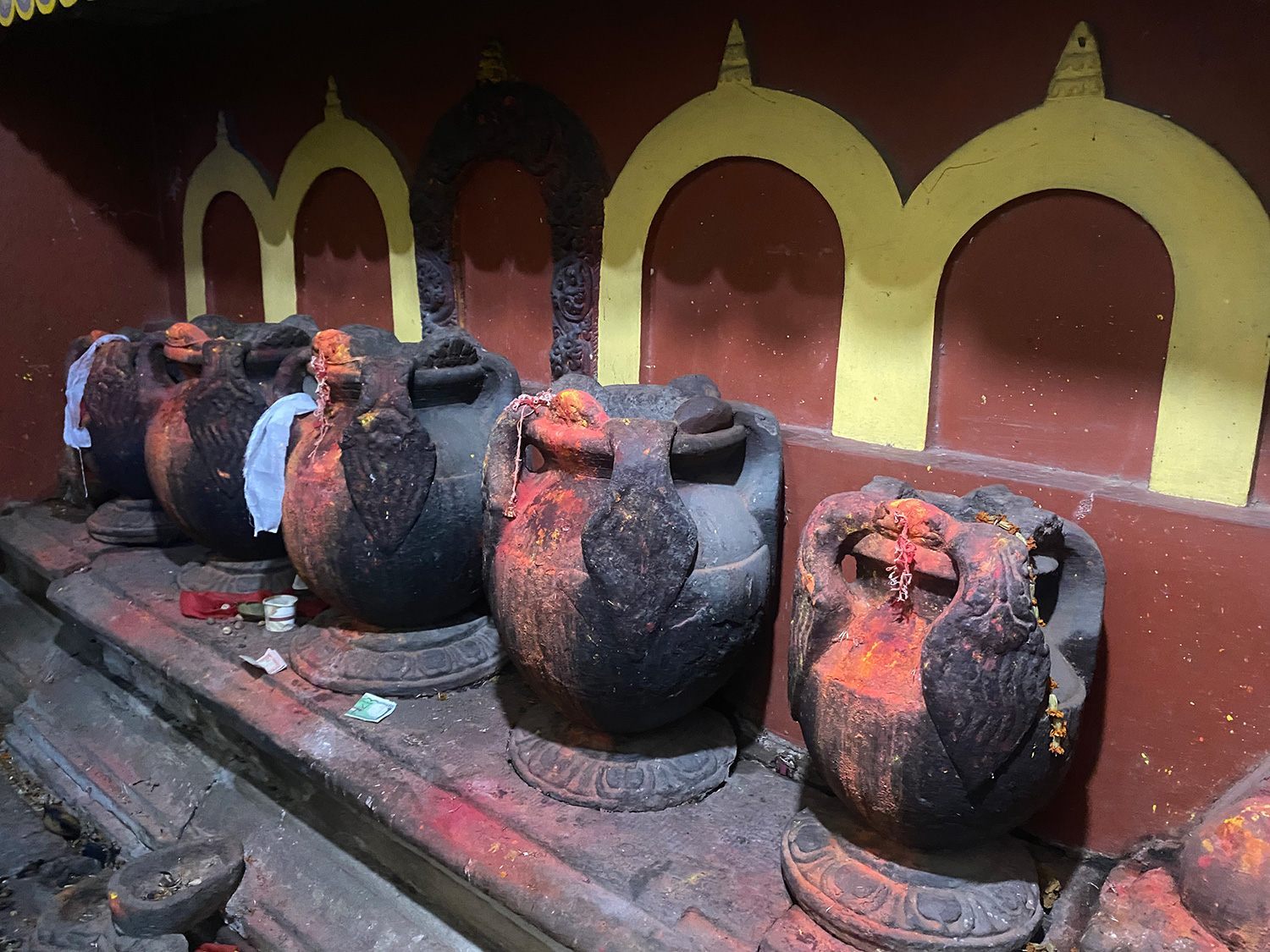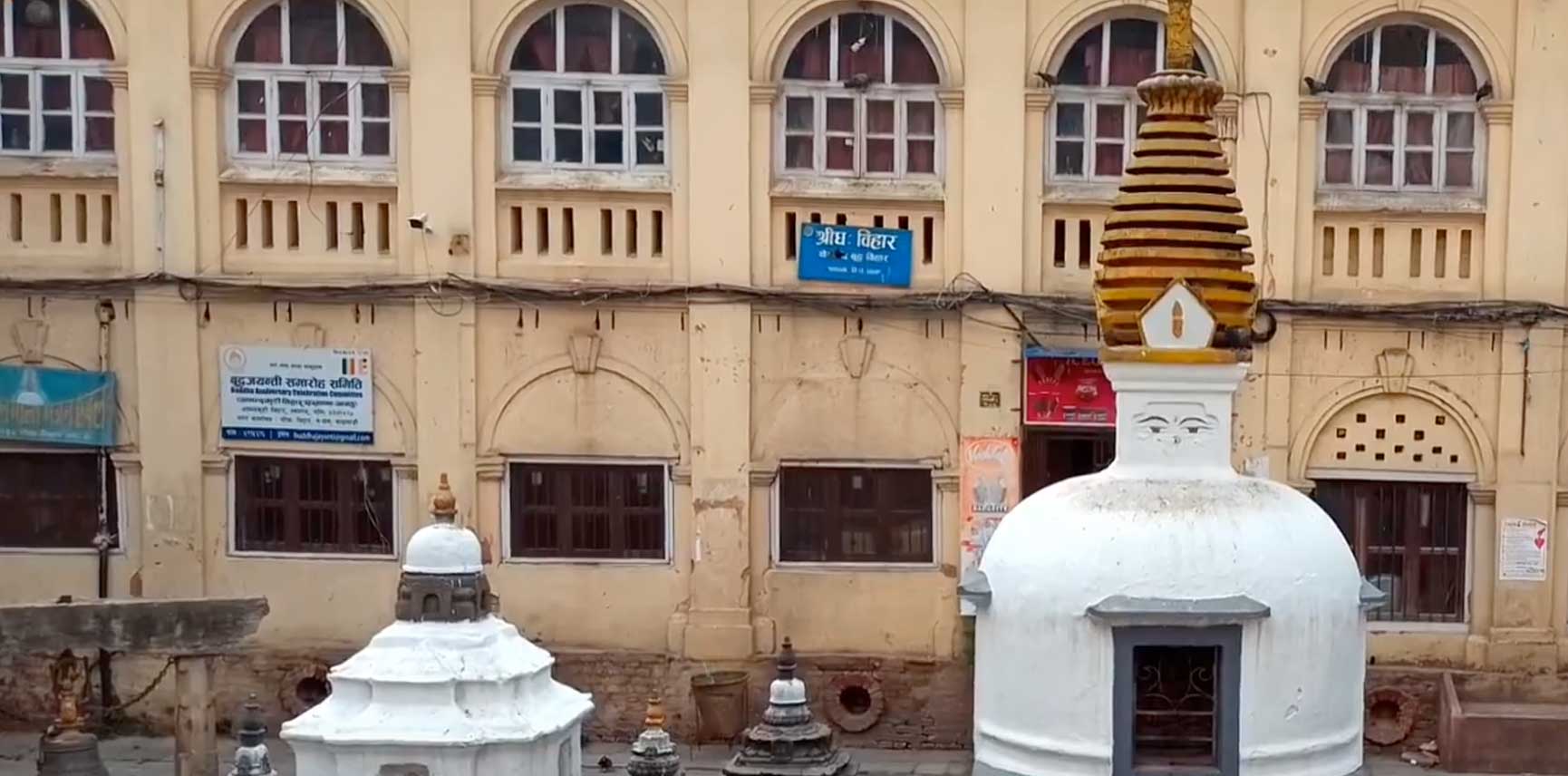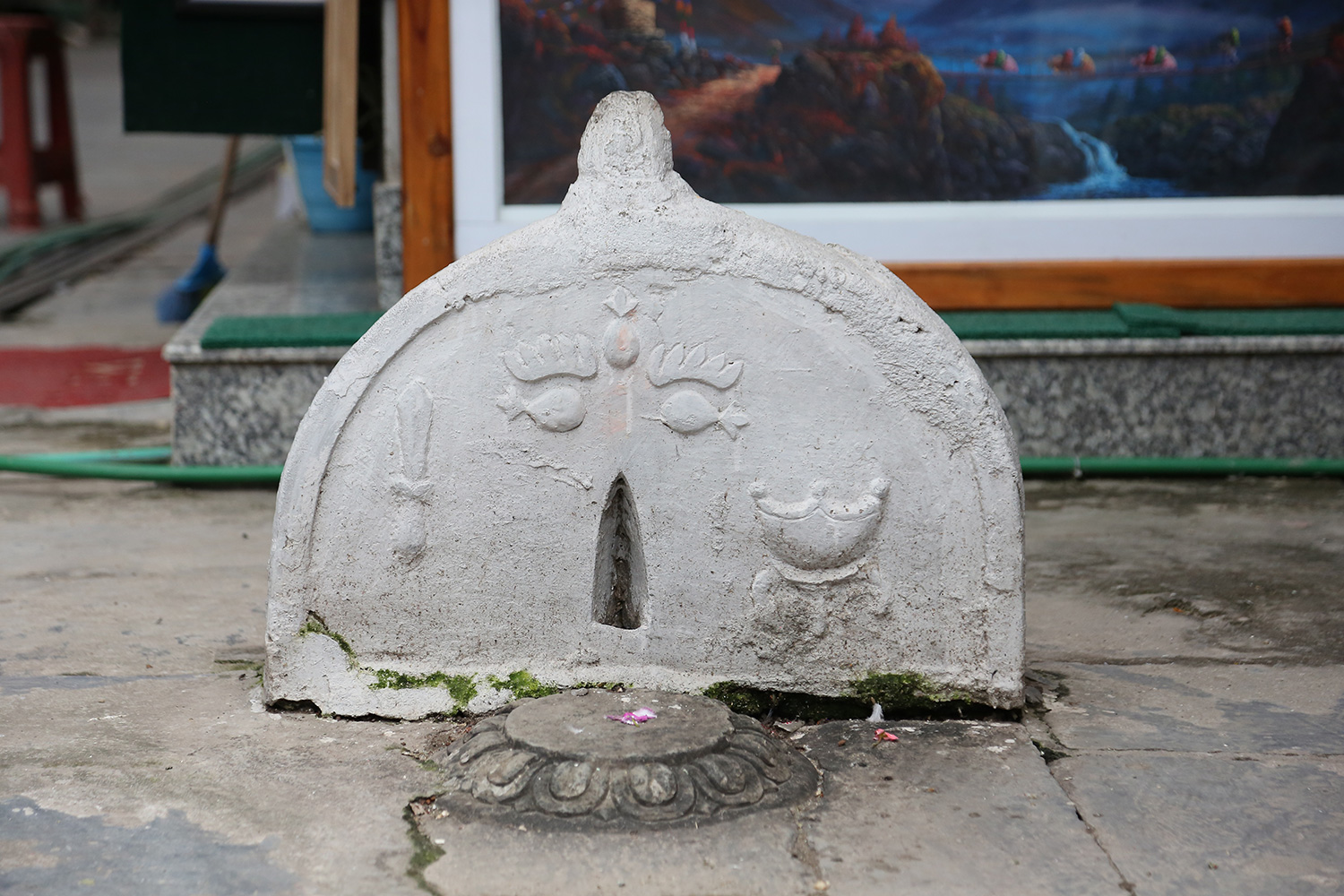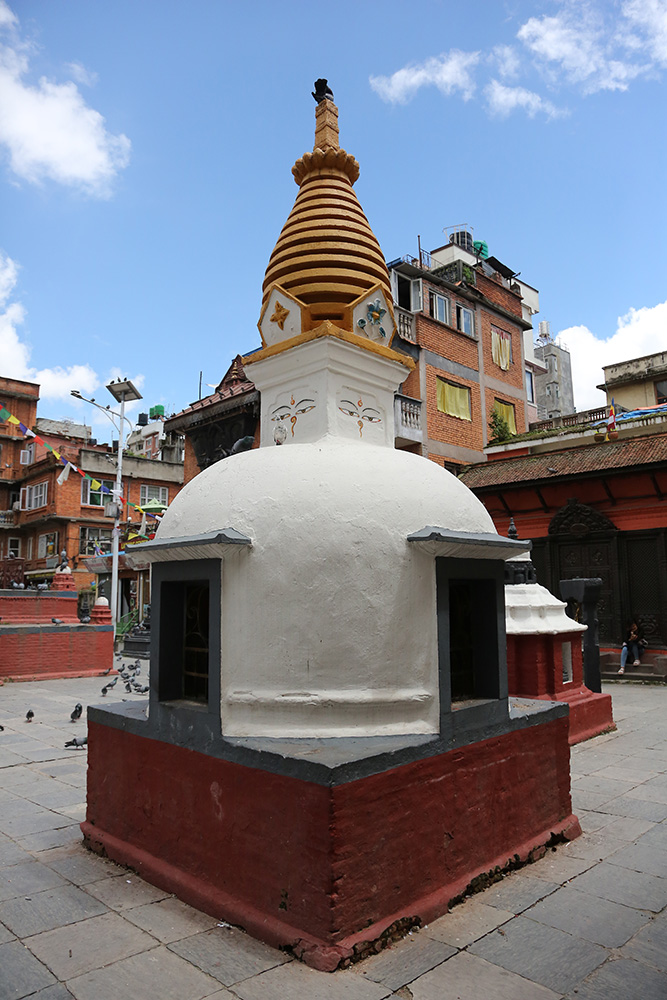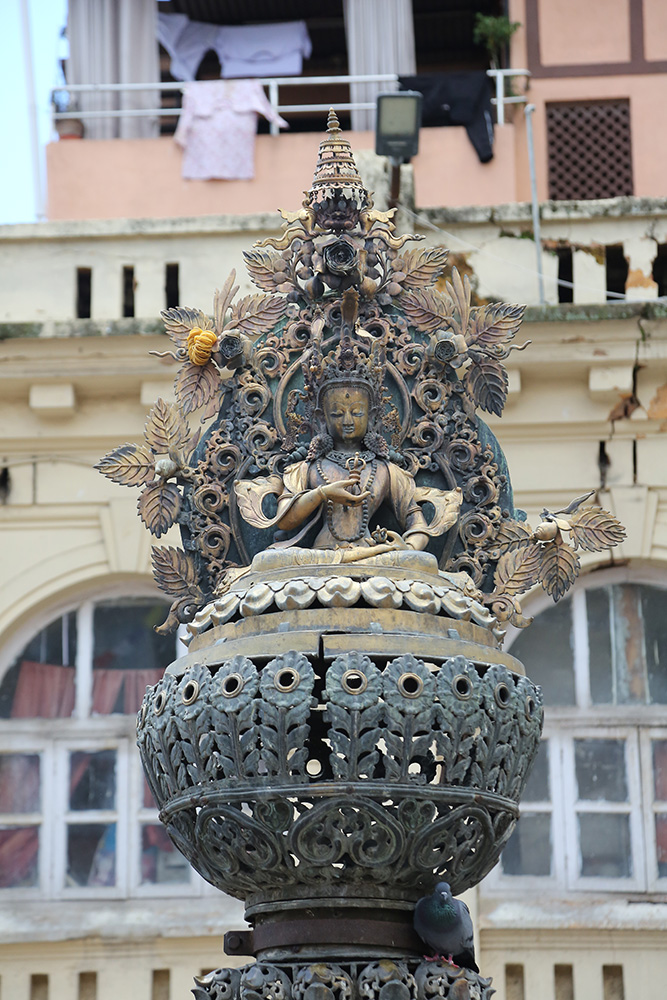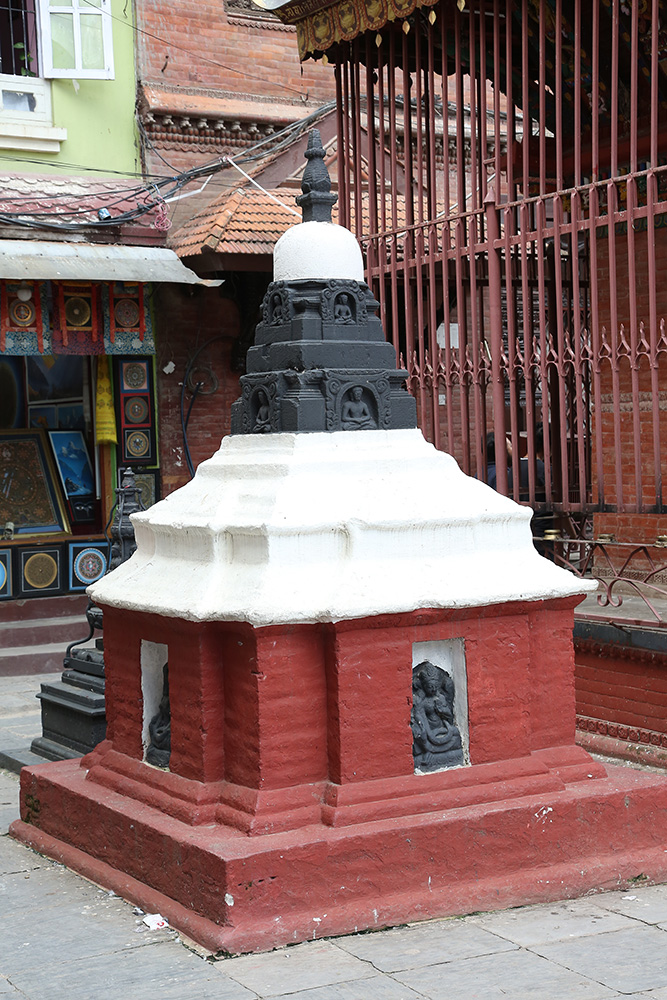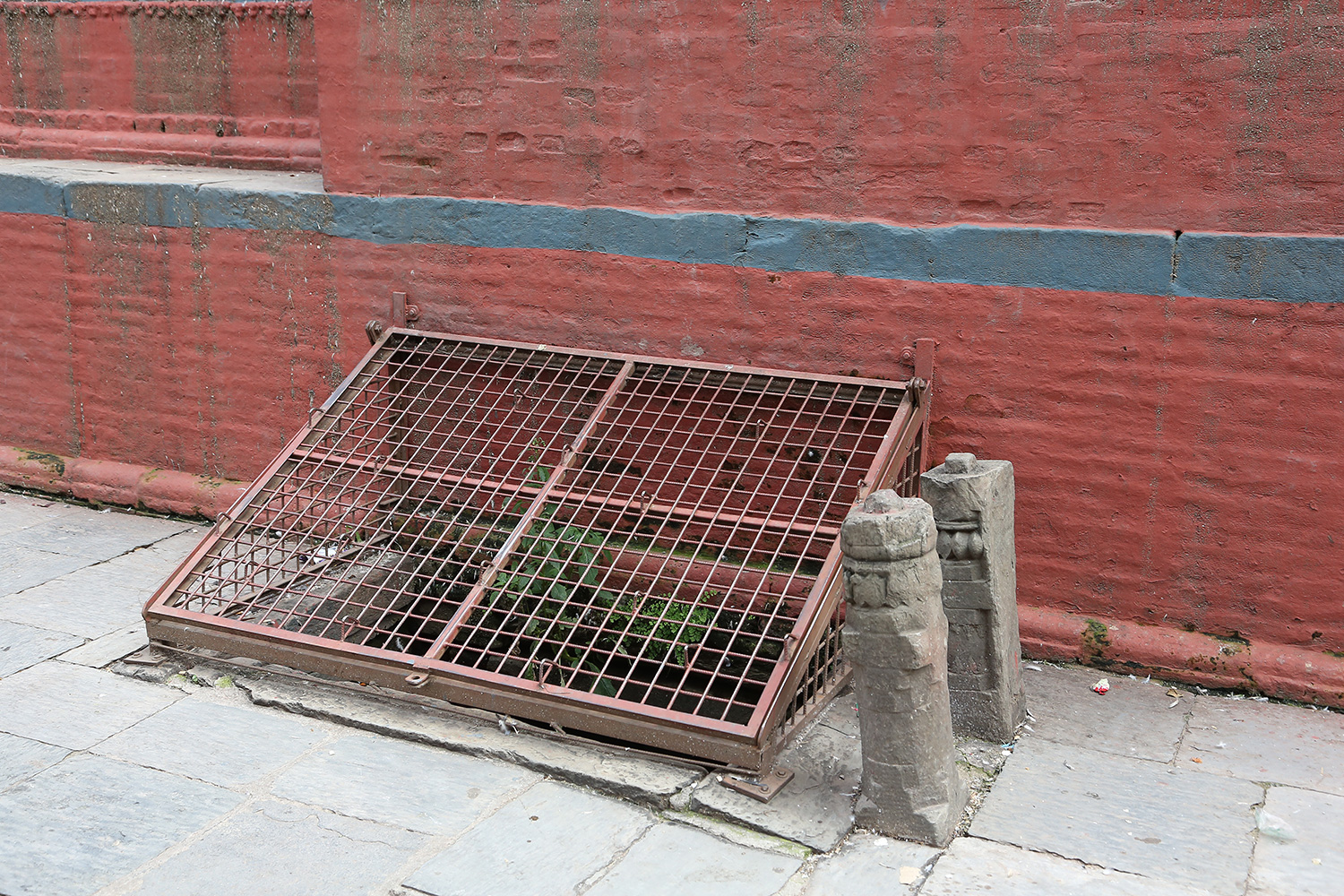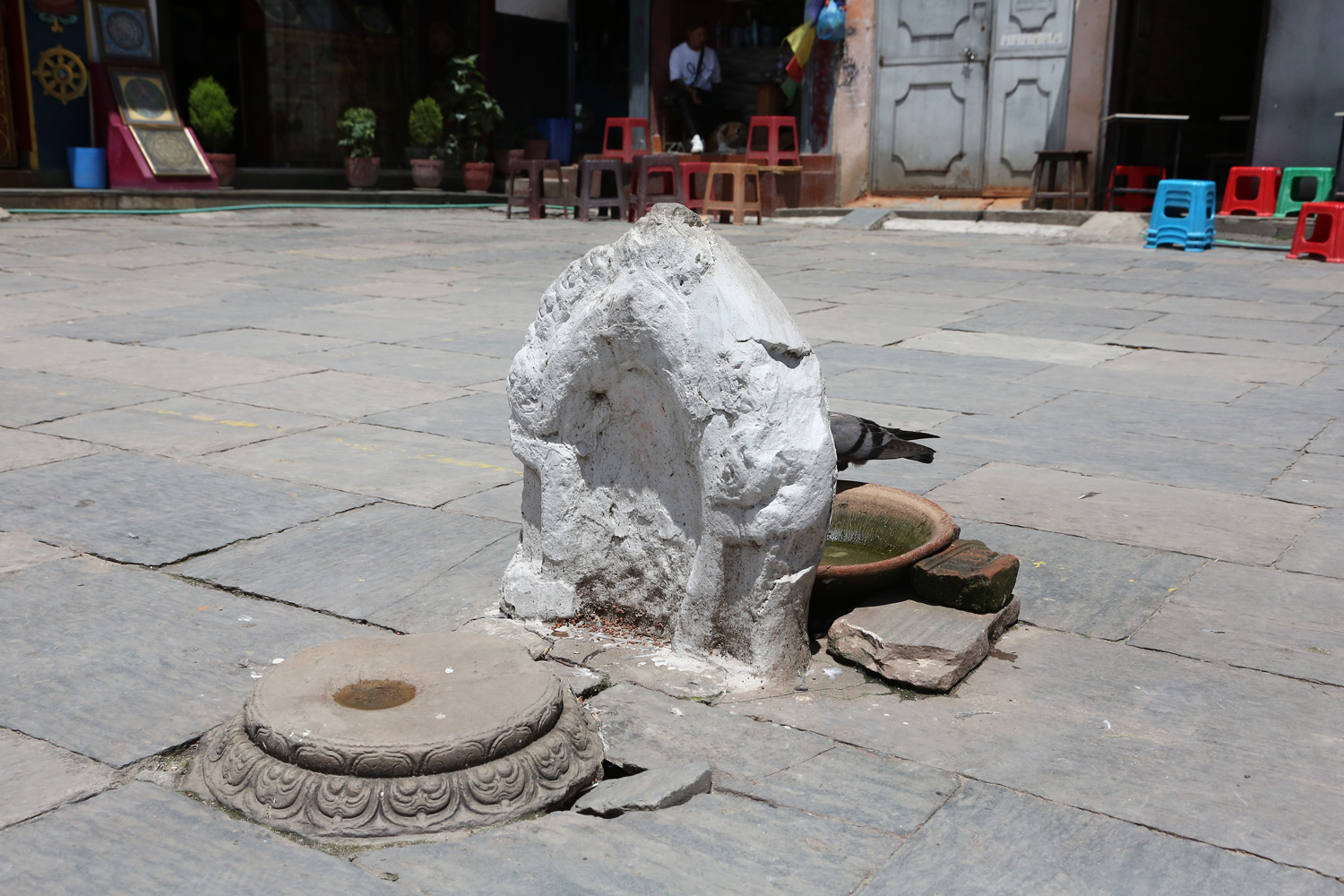

Śrīghaḥ Bāhāḥ derives its name from a unique collection of consecrated objects housed within a temple situated west of the chaitya. “Śrīghaḥ” is among the six sacred collections of vessels that have been positioned in the ancient city of Kathmandu. This chaitya is commonly referred to as “Kathe Swayambhu,” which translates to “a self-manifested wooden structure.” The term “Swayambhu Maha Caitya” is used to describe this monument because it closely resembles the original in terms of its construction, including its architectural design and overall structure. The full designation of Śrīghaḥ is Śrī Śantighatta Vajradhātu Caitya Mahāvihāra.
Legend has it that Acharya Vakvajra of Kwa Bāhāḥ, while on a pilgrimage along the Ganges river, was requested to sanctify a chaitya constructed by the monarch of Benaras. Vakvajra ceremoniously poured water from the Ganges River upon the monument. Nevertheless, the king did not believe in his power. In a display of his authority, Vakvajra proceeded to assume a meditative posture, effortlessly raised the chaitya, and subsequently relocated it to its current position in Kathmandu.
1. Vāyupura
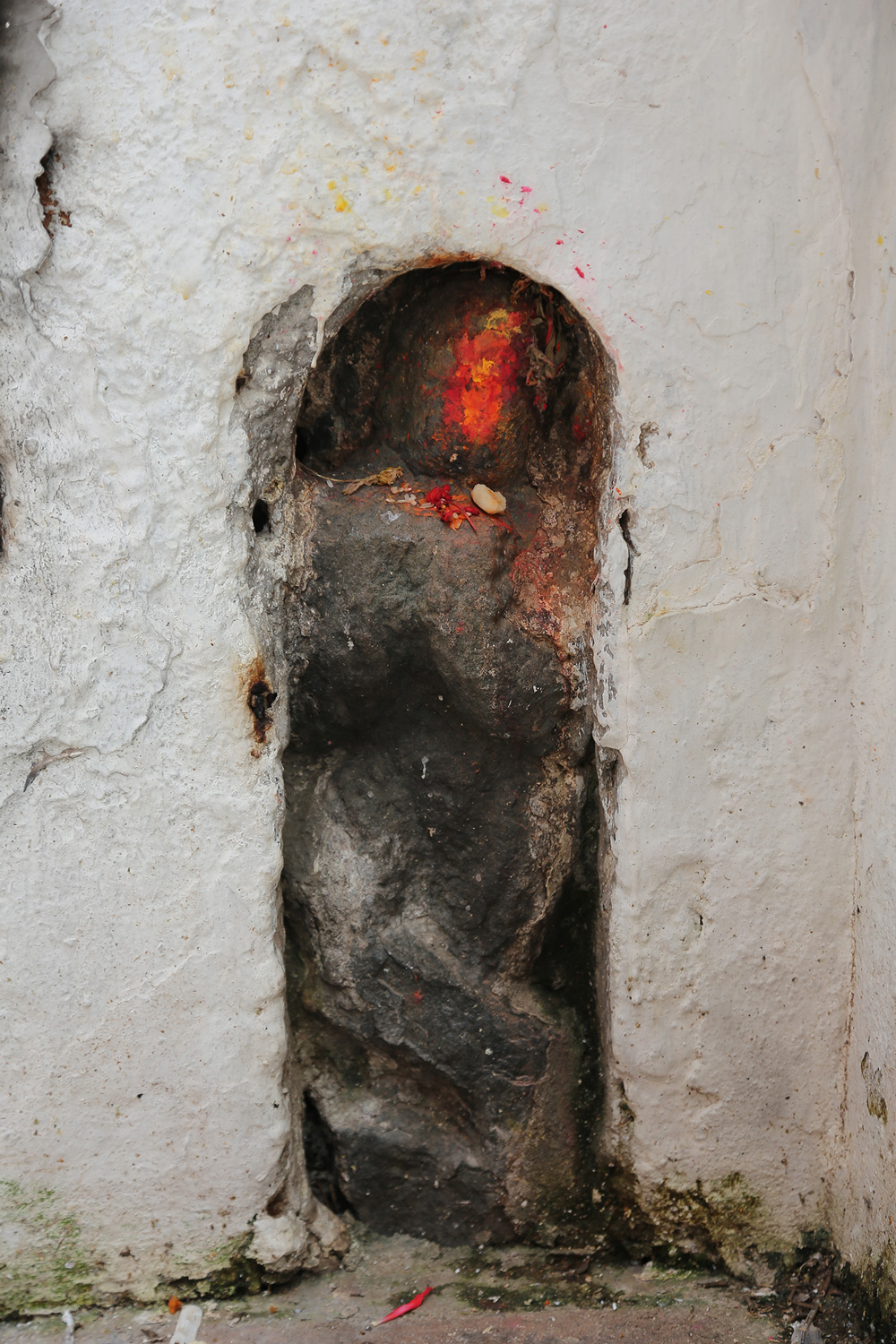
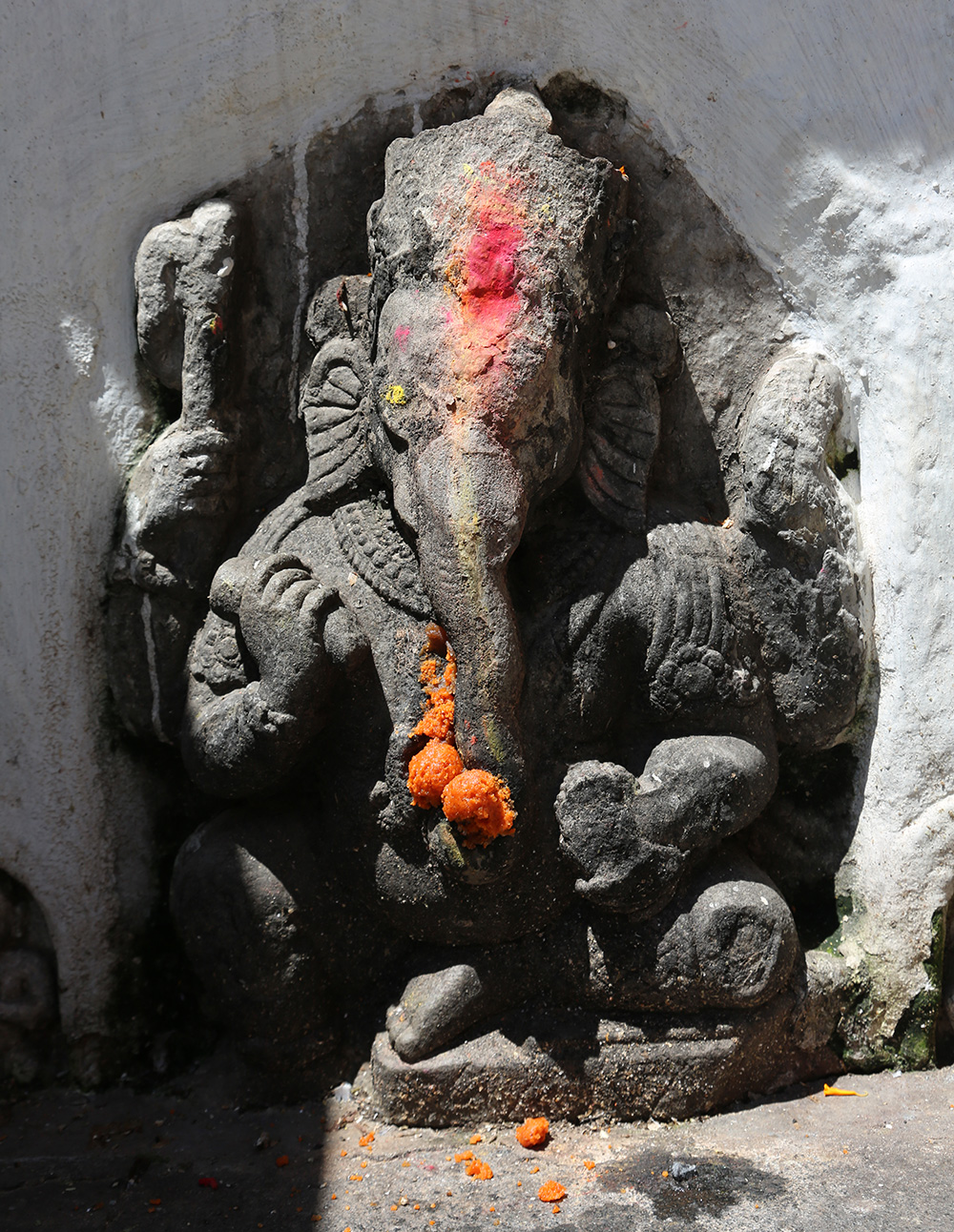
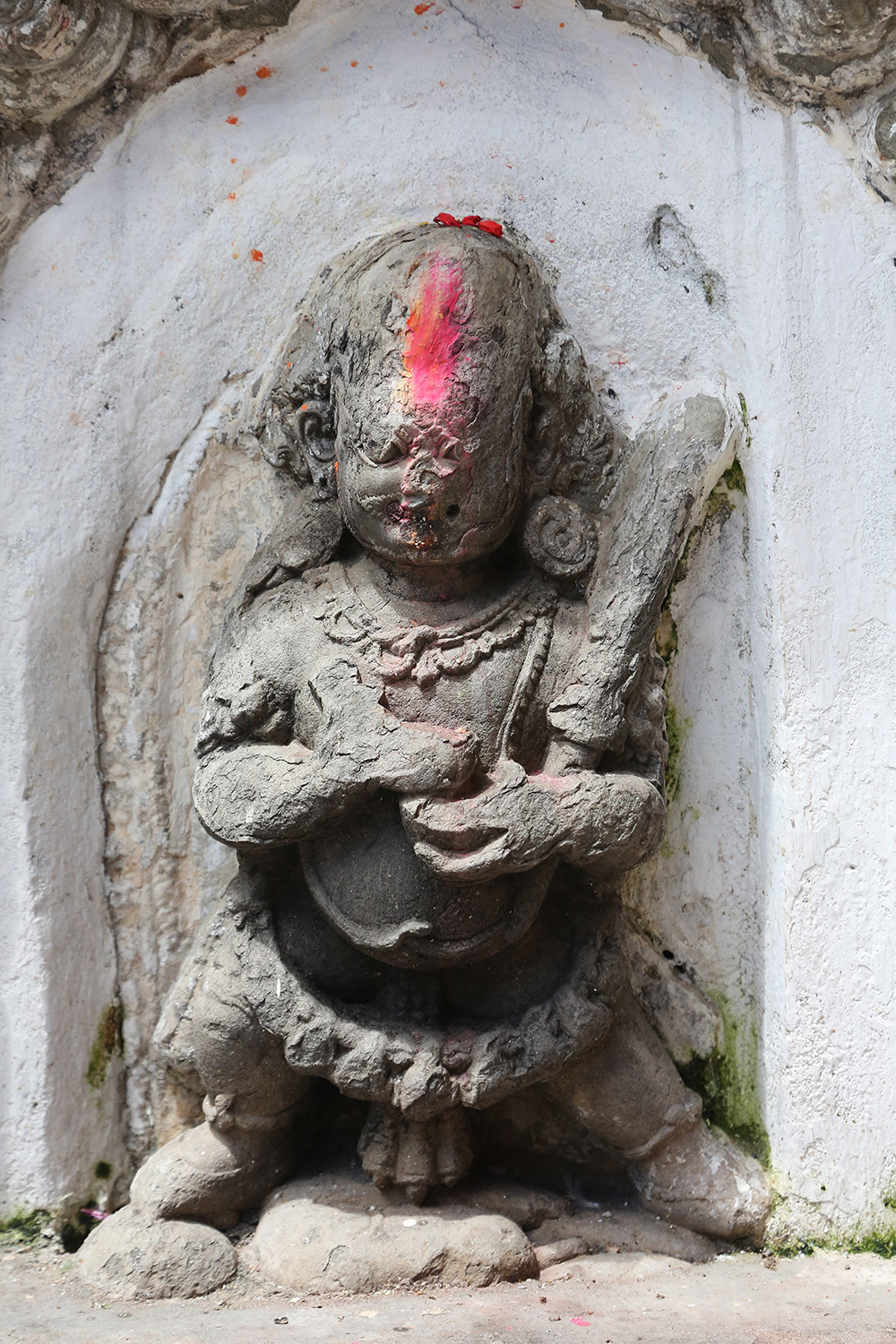
2. Kṛṣṇa, Gaṇeś & Mahākāla
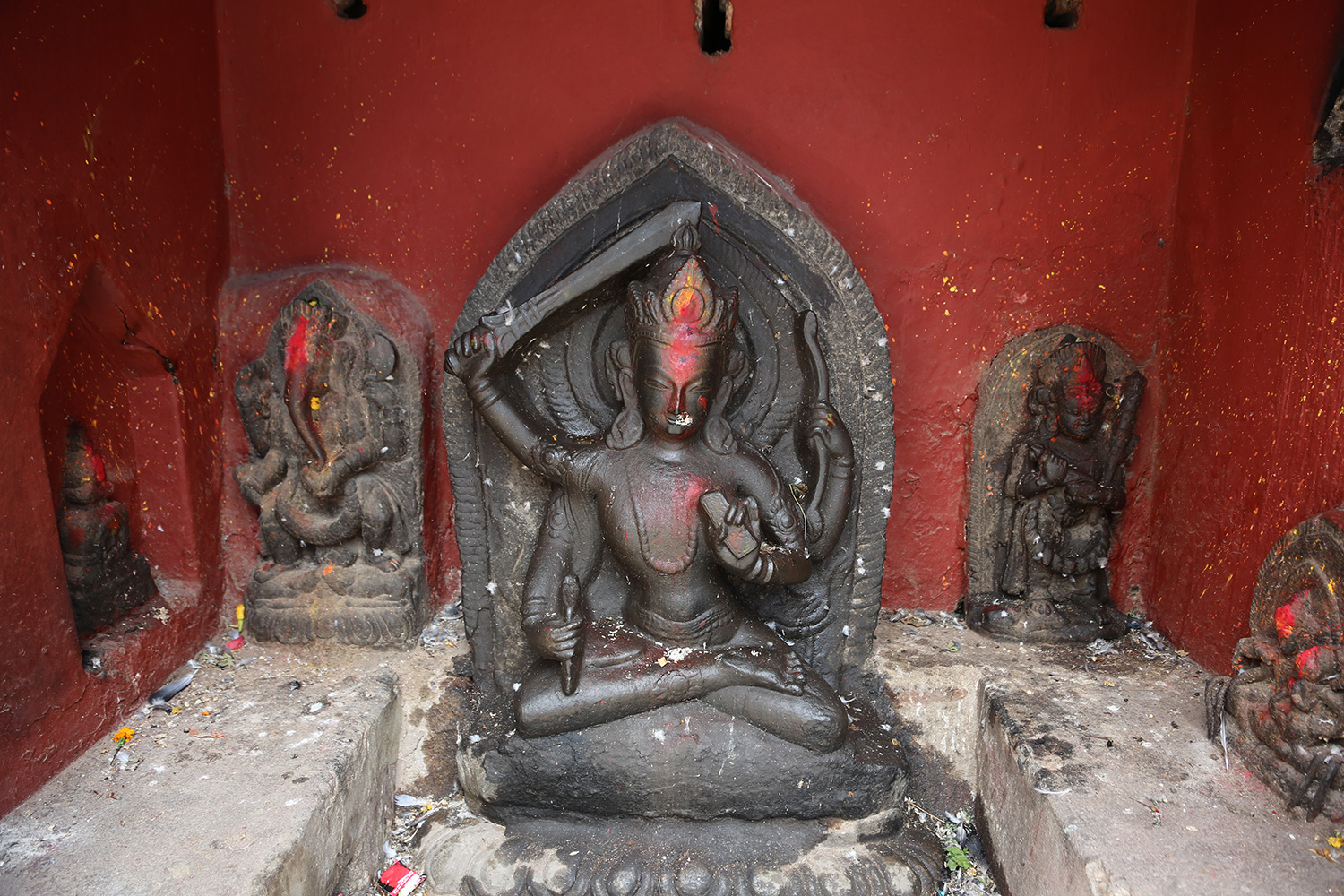
3. Mahāmañjuśrī
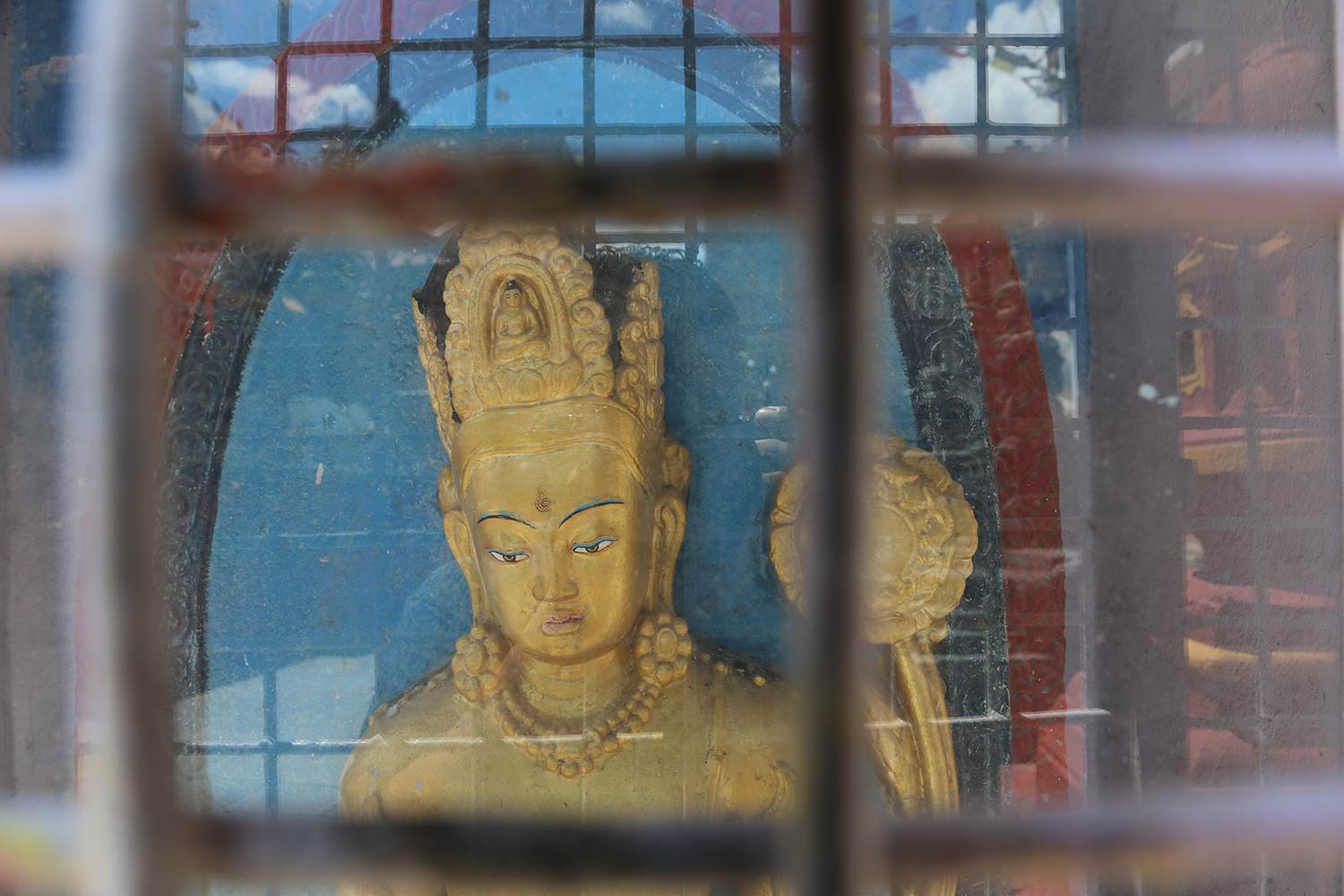
4. Kwāpādya – Akśobhya
5. Agaṃ Chen
6. Vasudhāra Dya Chen
7. Śantipura
8. Vajradhātu Maṇḍala
9. Gaṃ
10. Kashi Caitya
11. Vajrasattva
12. Hāratī Mātā
13. Amitāṃbha Caitya
14. Nāgpura
15. Padmapāṇī Lokeśvara
16. Śākyamunī Buddha
17. Ṛṣeśvara Mahādeva
18. Agnipura
19. Dharmakirti Vihāra
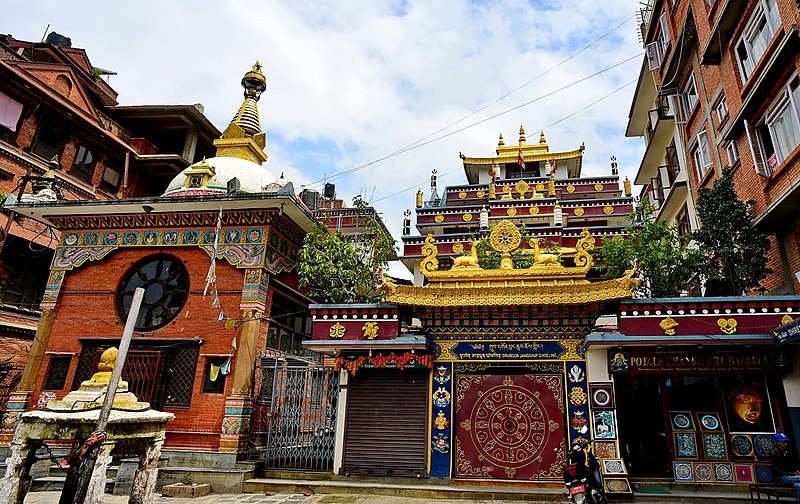
20. Drubgon Jangchup Choeling Monastery