

In the Mahāparinirvaṇa Sutra, Buddha advised his disciple Bhikkhu Ananda on venerating him after his Mahāparinirvana by constructing and consecrating Caityas (Stūpas). These structures, also known as Thūba or Stūpa, enshrine the relics of Buddha, Prateka Buddha, Śrāvaka Buddha, and monarchs who turn the Dharma wheel. Worshiping Caityas is considered a meritorious act of devotion.
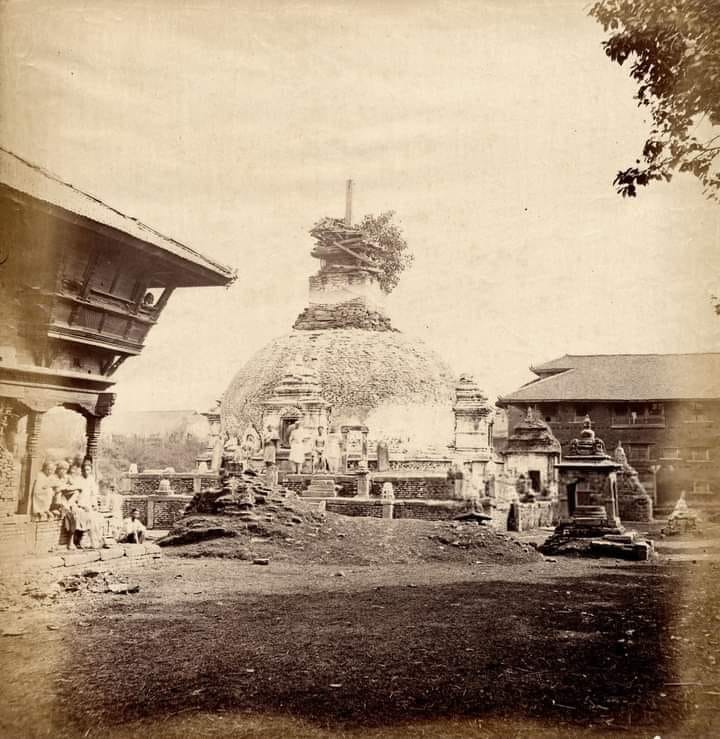
1860 AD by Clarence Comyn Taylor
During the Maurya period in the third century BC, the remains of Buddha were enshrined in dome-shaped structures, marking the early form of the Stūpa. The Caityavāda sect, one of the 18 Nikāya (sects) of Buddhism, emerged around 200 years after Buddha’s Mahāparinirvaṇa. In the Gupta period, Caityas featured elaborate designs and numerous statues of the Panca Buddha.
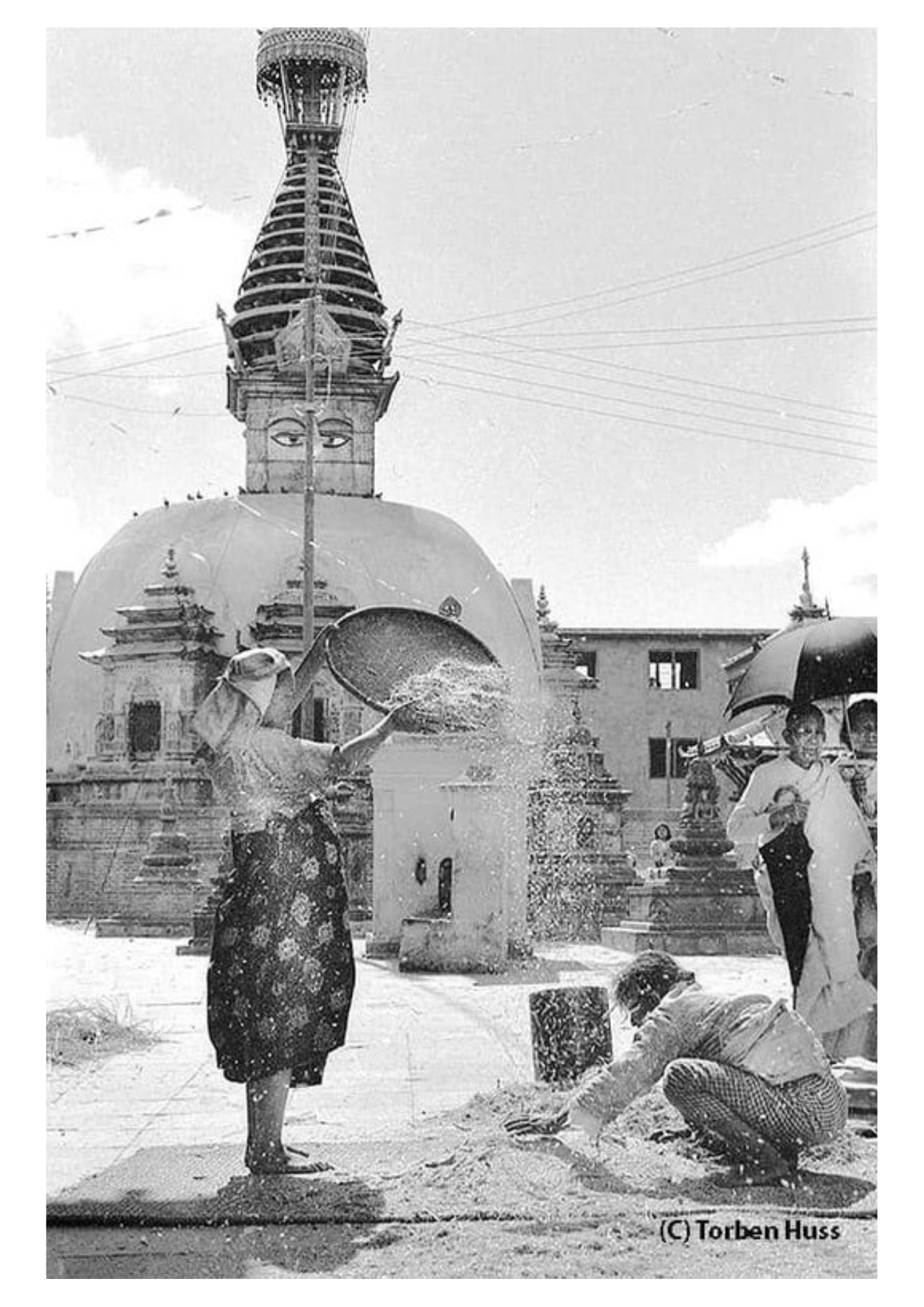
1960 AD by Torben Huss