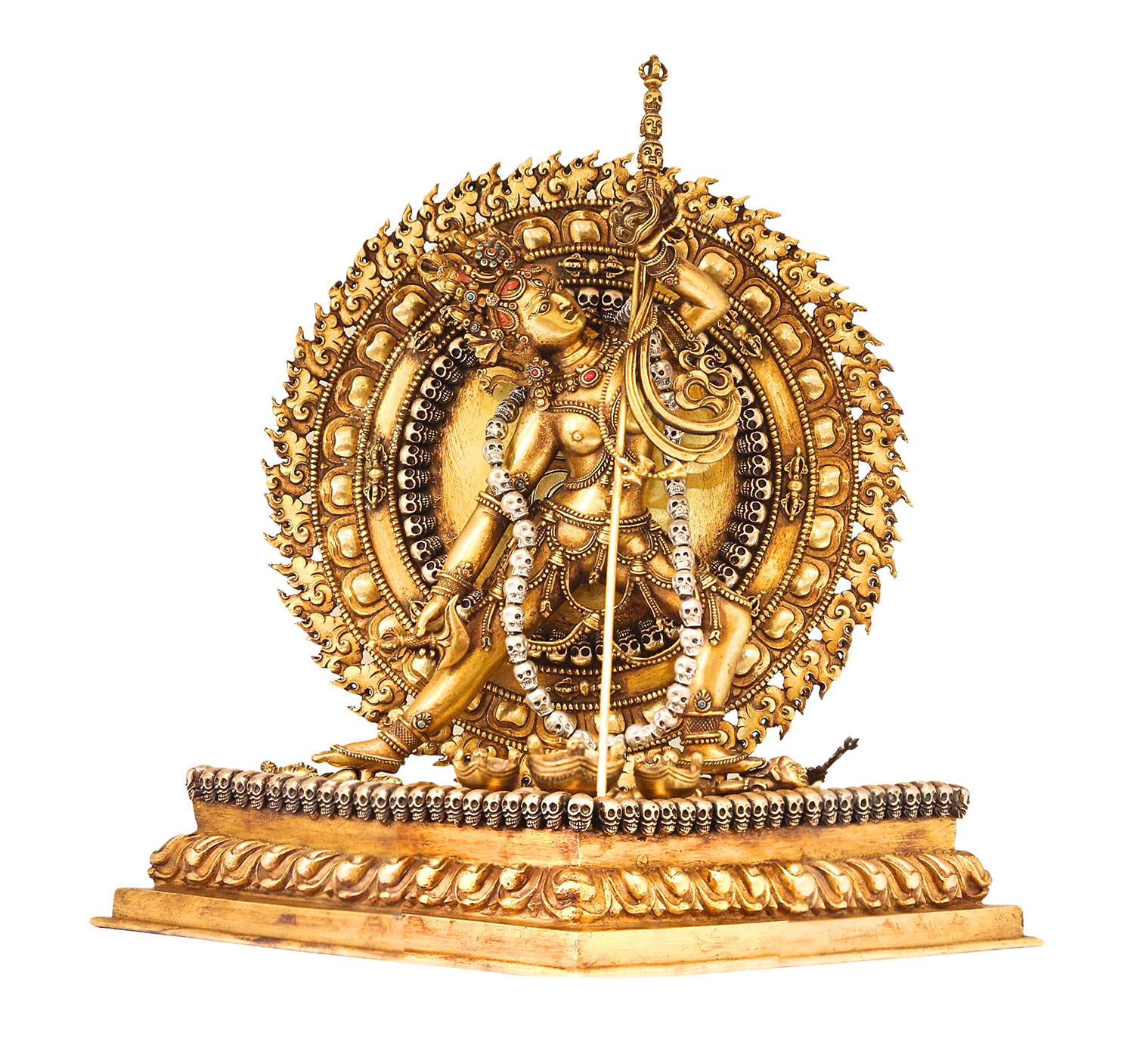

Mahākāla appears here in a six-armed (Ṣaḍbhuja) form, rendered with compositional balance and grounded force. Standing upon subdued figures, the deity signifies the overcoming of obstacles.
The six arms extend in measured rhythm, holding ritual implements that embody protection and transformation. A rising flaming aureole surrounds the figure, intensifying its presence. Rooted in Newar metal traditions, the sculpture combines refined ornamentation with a strong, embodied physicality.
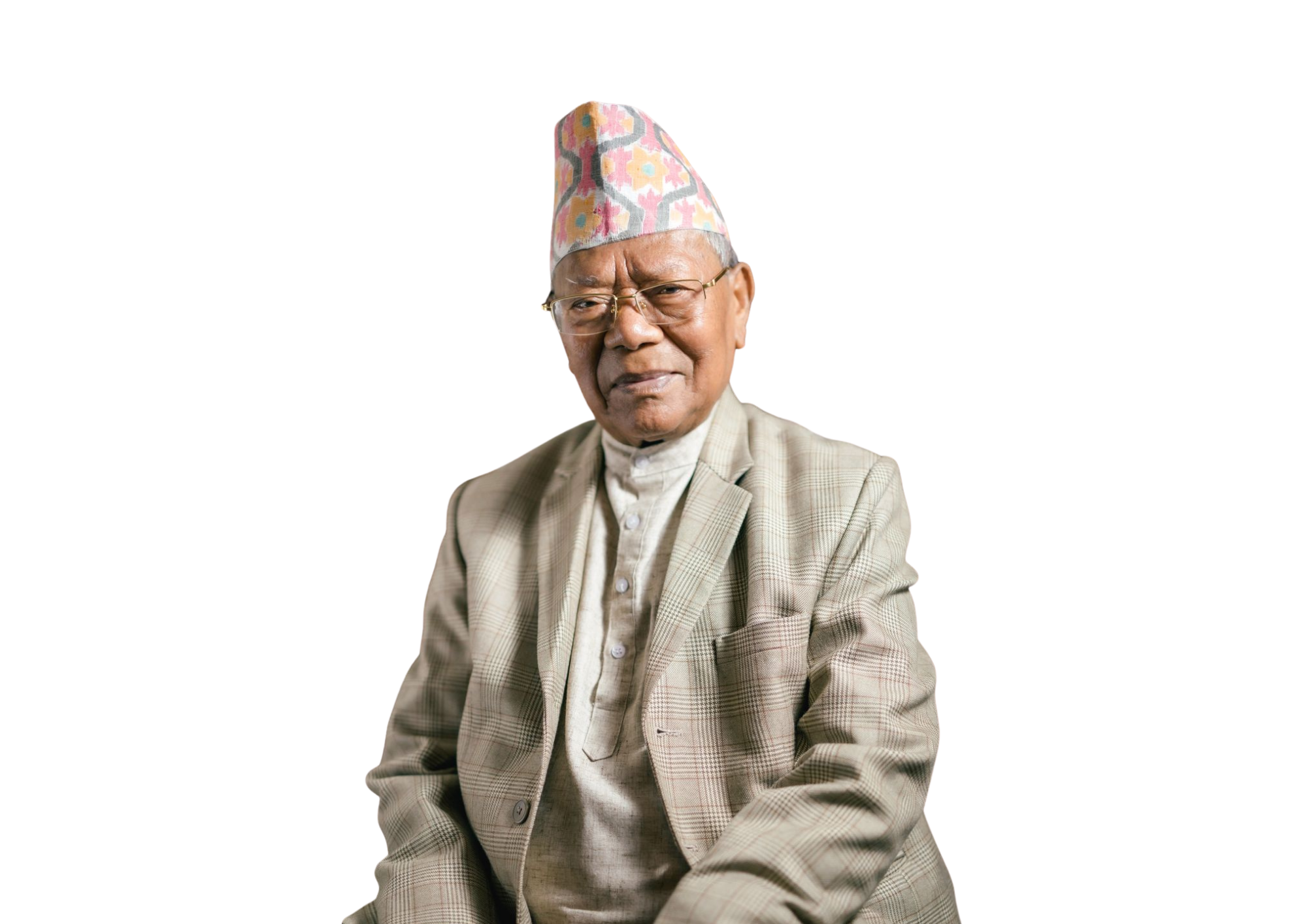
One of the most formidable figures in modern Nepali sculpture, Kalu Kumale’s practice spans over six decades, shaping stone and metal into expressions of emotion, philosophy, and cultural memory. Emerging from Lalitpur’s rich Newar artistic lineage, he became a master of “Krodhkala”, reinterpreting wrathful deities through deeply personal and contemporary perspectives.