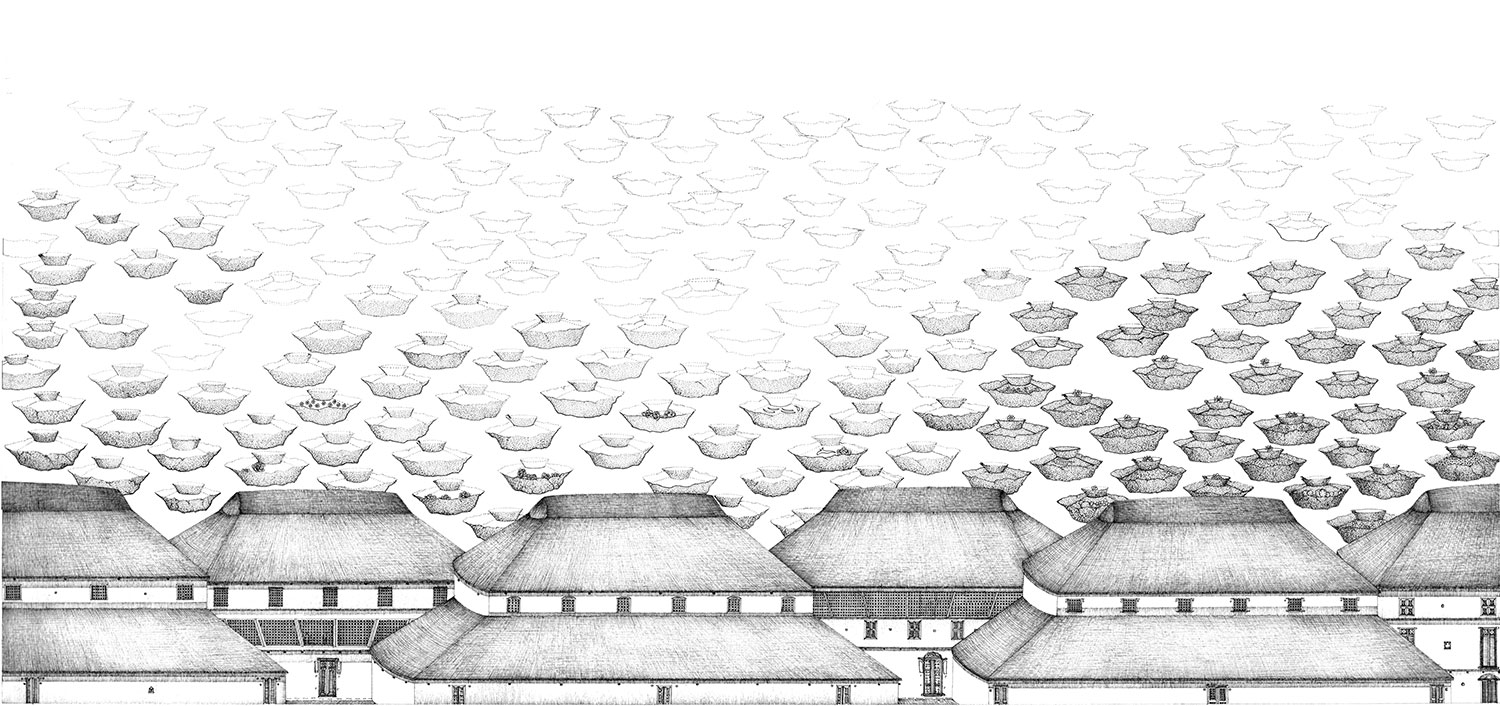
Through meticulous architectural line work and repeated tapari forms, Leo Jhankar reflects on memory, devotion, and communal life within the Kathmandu Valley. Traditional Newar houses anchor the composition, while floating ritual offerings evoke the aspirations and emotional life of the community. Within Bhavana, the work becomes a meditation on cultural continuity, where architecture and ritual coexist as expressions of belonging and shared heritage.
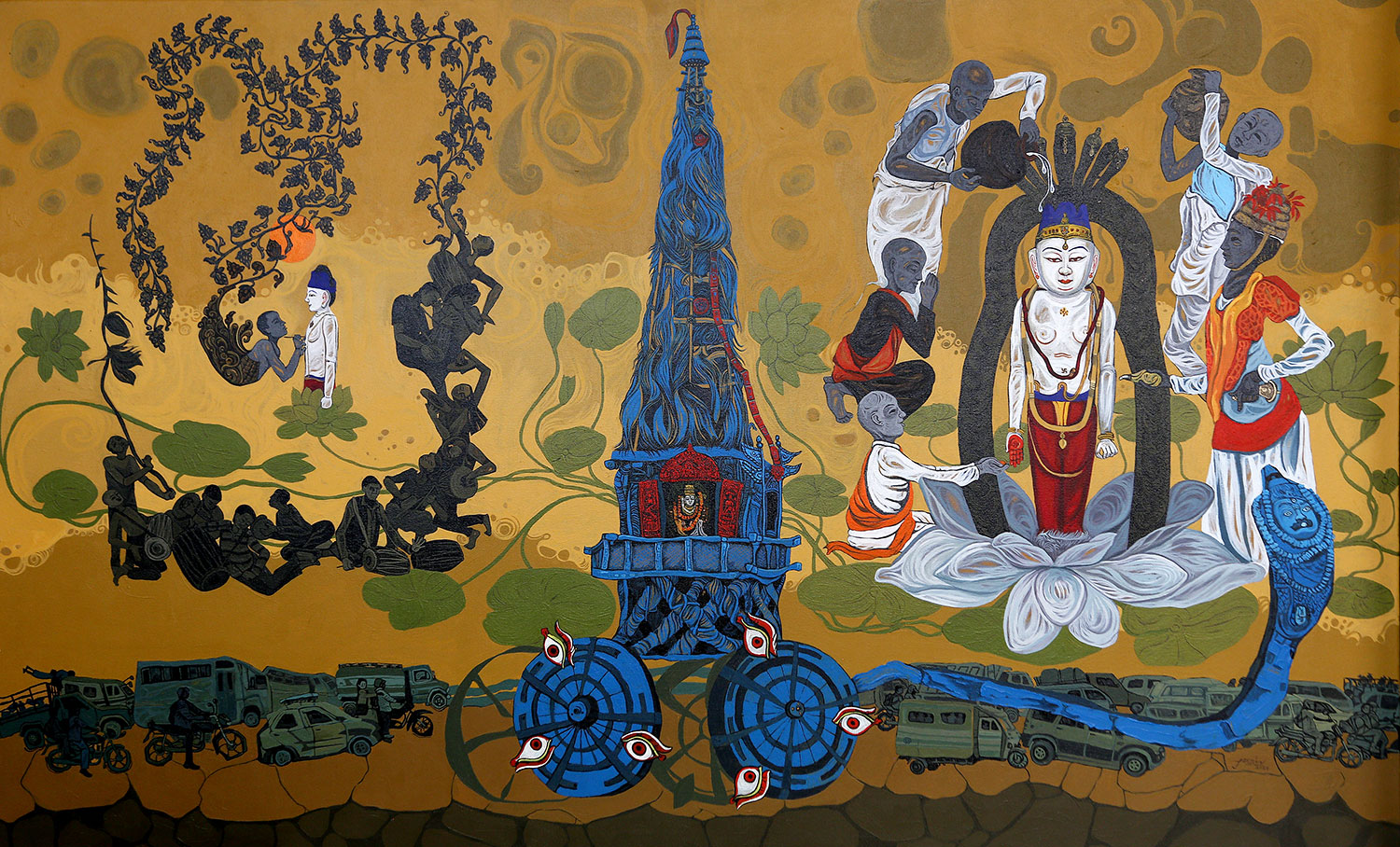
Leo Jhankar’s work is shaped by the interplay of nature and culture. Moving into the urban landscape of Kathmandu, he reflects on environmental change while drawing inspiration from the city’s rich traditions and lived cultural experiences. His practice is grounded in careful study and planning, where each work emerges through a thoughtful process.