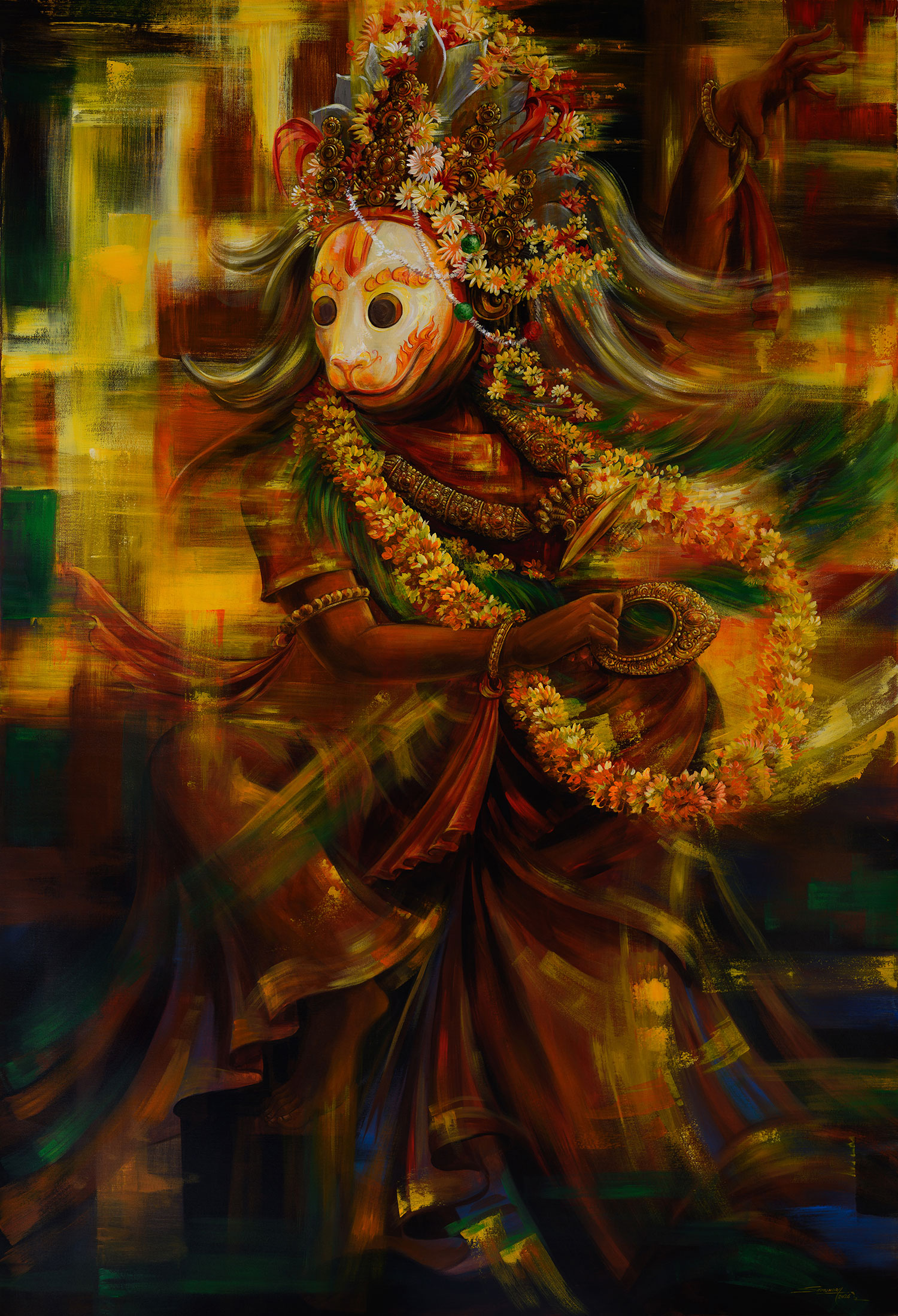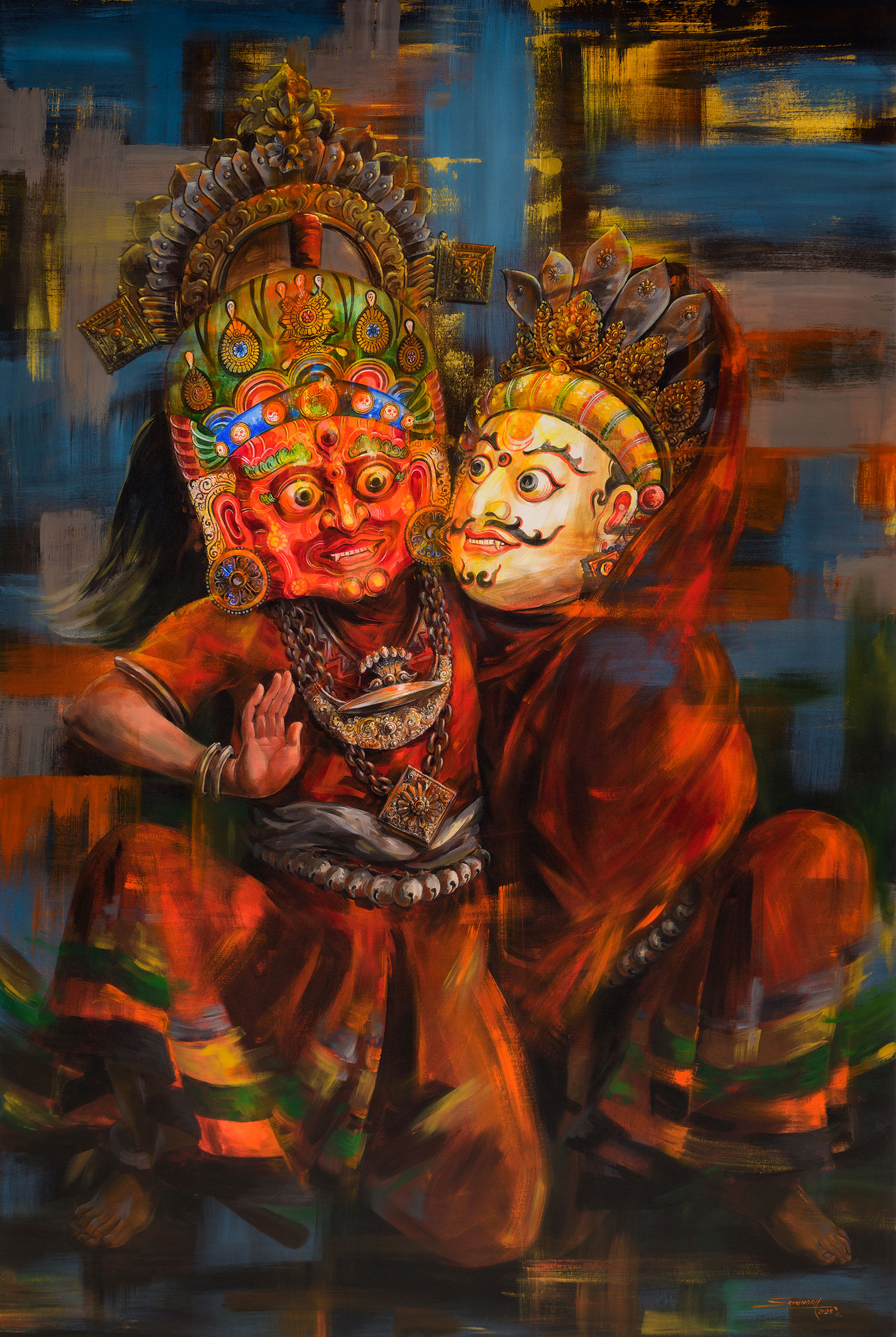
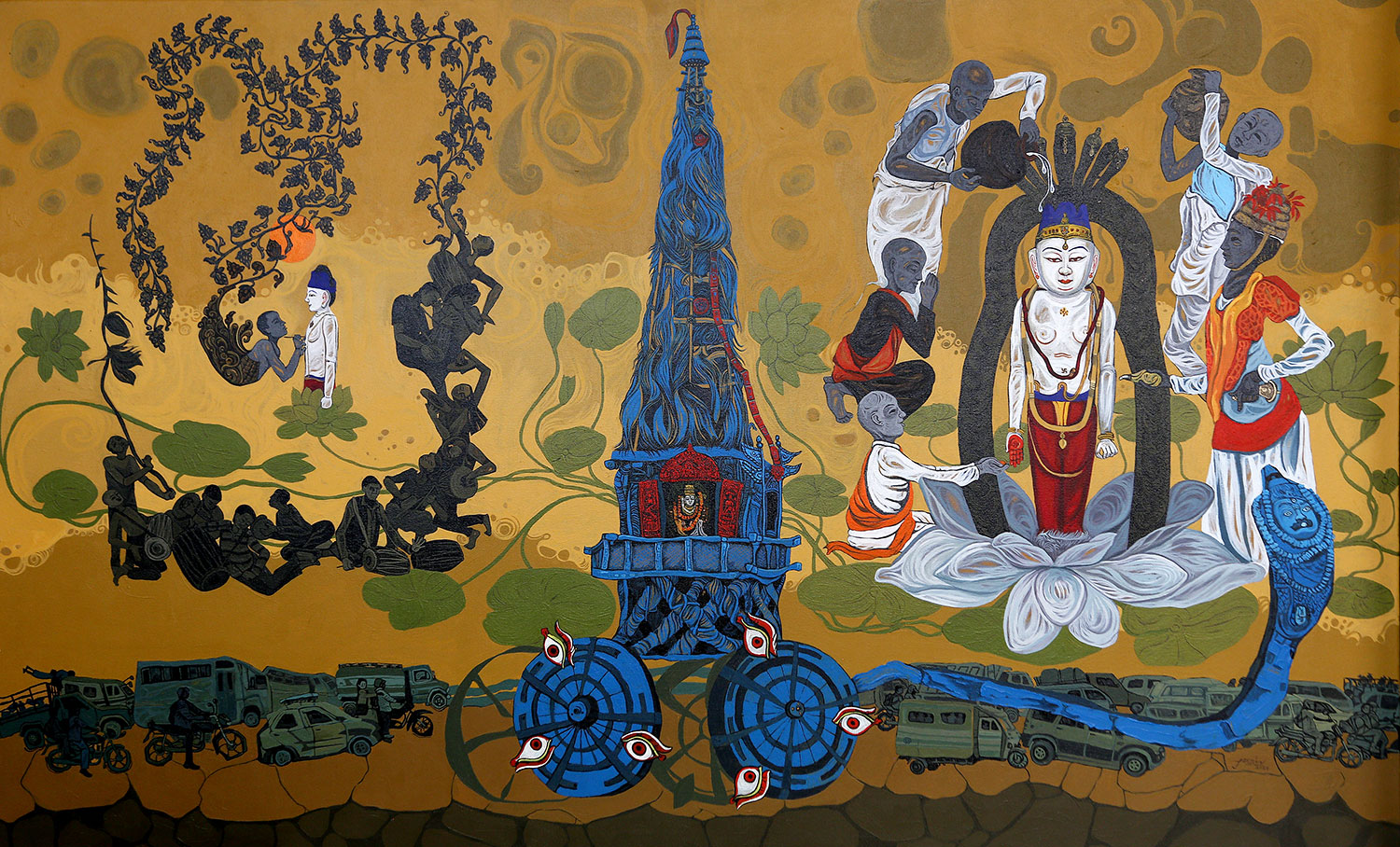
This work depicts the ritual bathing of Seto Macchindranāth, an embodiment of compassion within Newar Buddhism. As one of the 108 forms of Avalokiteśvara, the deity represents the vow to alleviate suffering. The composition captures preparation, ritual, and procession, including the chariot festival through Kathmandu. Traditional elements merge with contemporary urban life, reflecting continuity of devotion.
The work situates Karuṇā as a living presence, moving through both sacred practice and the rhythms of the modern city.
A visual artist whose work balances instinct and reason, tradition and modernity, Jasmin Rajbhandari creates paintings where growth and transformation take form through the image of women emerging from blossoming flowers. Drawing from native artistic traditions and natural symbolism, motifs like the lotus become a bridge between heritage and contemporary expression